

Overview
The following provides specific use-case samples and examples of various SIP documentation, PCAP snippets, and reference guide for SIP INVITEs and expected header-handling behavior when interworking T-Mobile, Joonto SBC/OpenSIPS, and UC partners.Telegent highly recommends sending the
Identity header received from T-Mobile whenever possible. If an upstream partner does not provide the Identity header, the call should still be allowed to proceed, but may have potential for STIR/SHAKEN attestation issues.Voice Origination – OTT
- The
Diversionheader allows an OTT call to not automatically be marked as scam likely on the T-Mobile network, because the call didn’t originate on the device PRACKis required for T-Mobile to ring the device
Inbound INVITE sample where no Identity header is passed to Telegent SBC
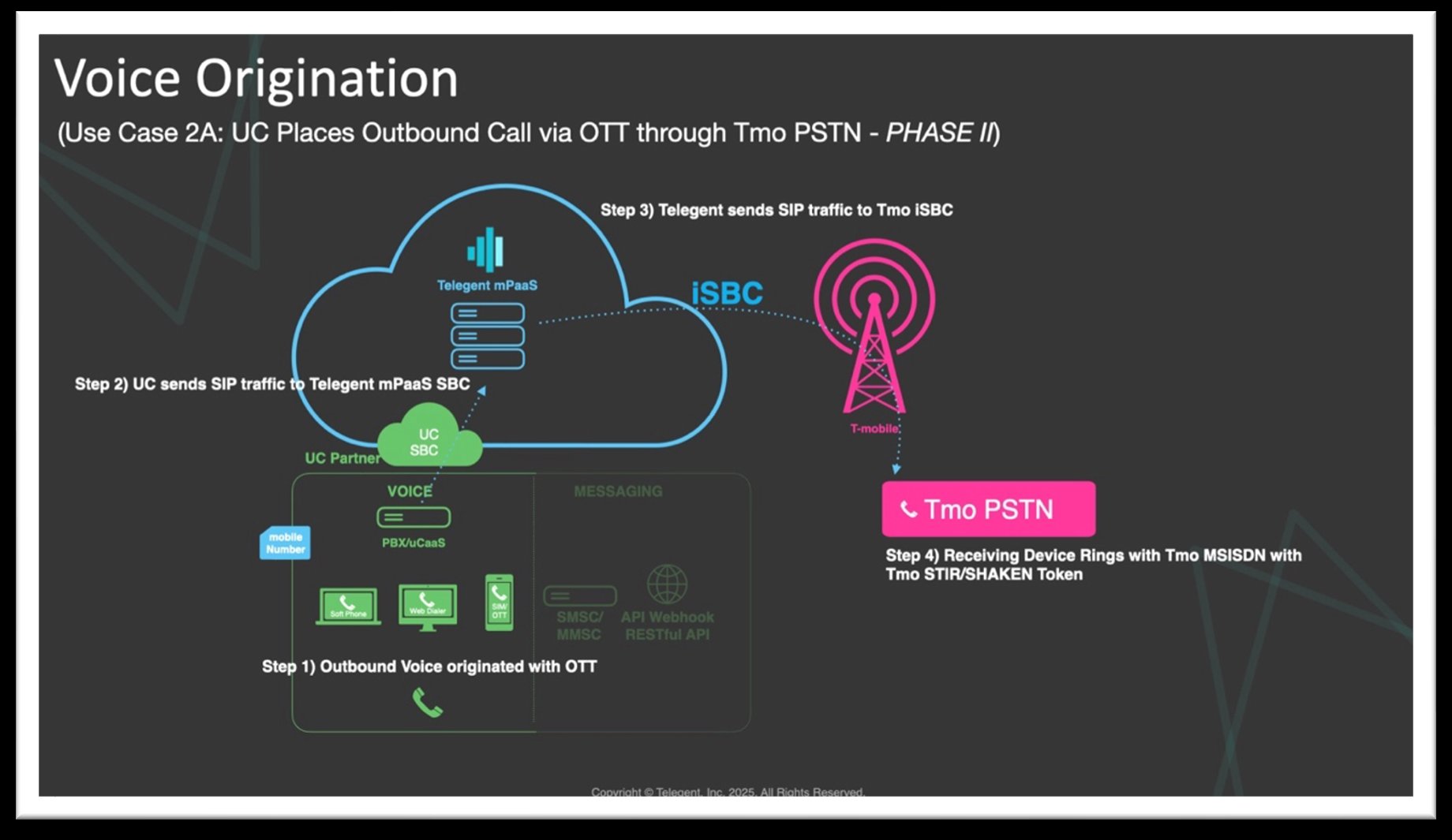
Use Case 2A: UC places outbound call via OTT through Tmo PSTN — Phase II
Voice Termination – Single SIM Device Endpoint
Step 1: Inbound INVITE sent first to UC partner for inbound ringing with Identity header
Step 2: INVITE sent to Telegent SBC for ringing SIM device
PRACKis required for T-Mobile to ring the device
Sample of above call scenario
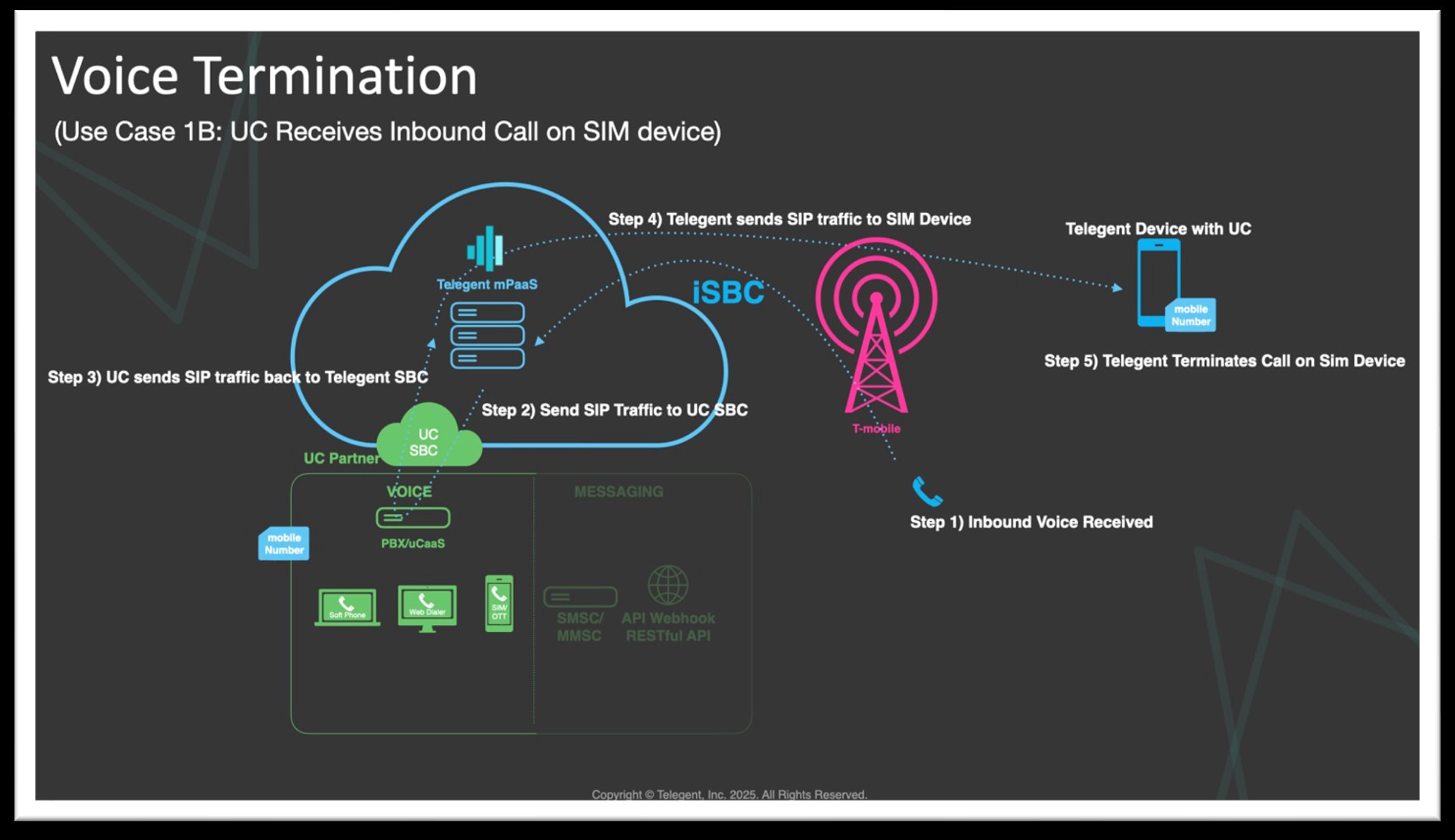
Use Case 1B: UC receives inbound call on SIM device
Voice Termination – Forked Device Example
Step 1: Inbound INVITE sent first to UC partner for inbound ringing with Identity header
Step 2: INVITE forked to alternate branch (e.g. SIM/OTT app)
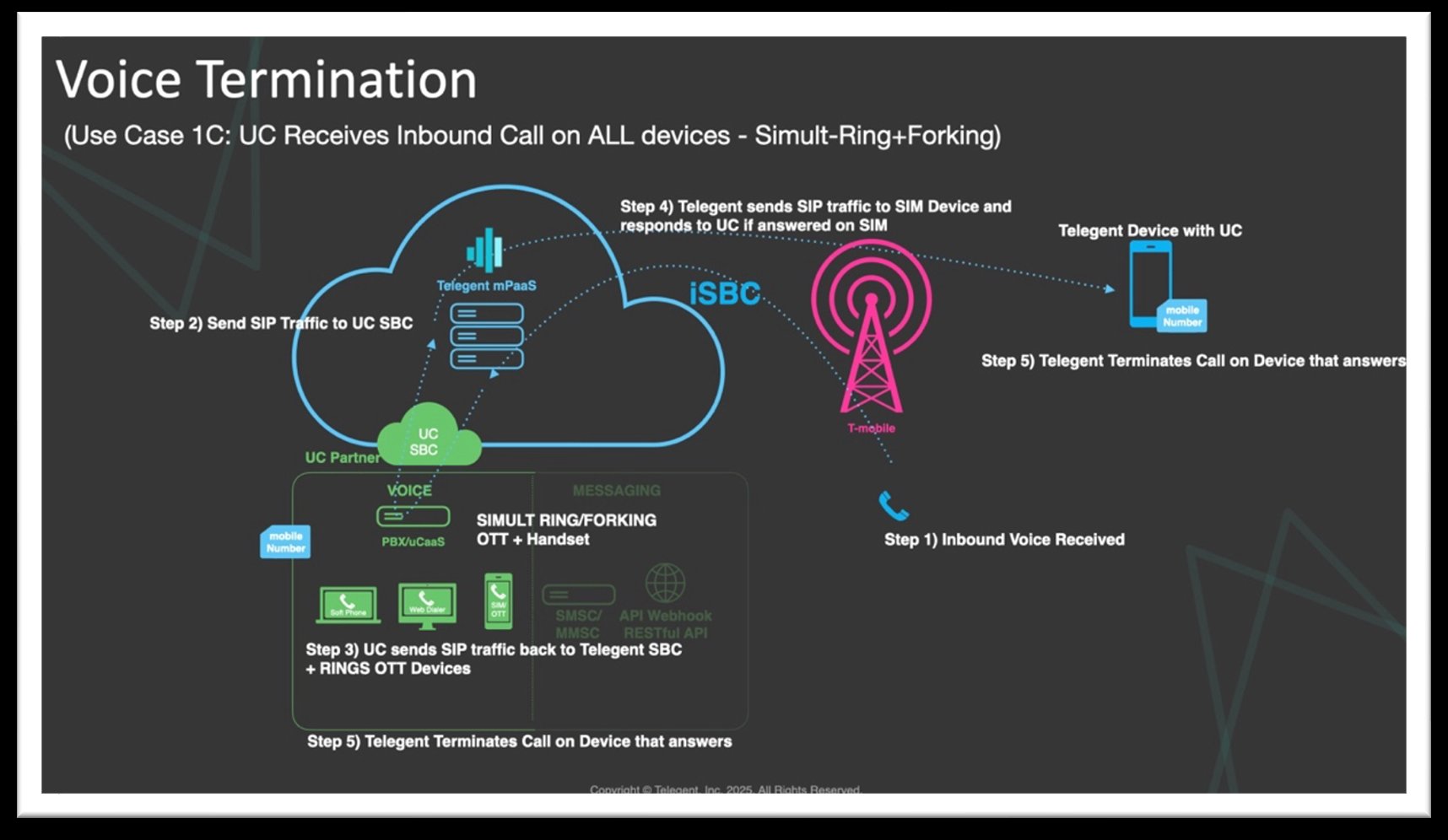
Use Case 1C: UC receives inbound call on ALL devices — Simult-Ring + Forking
If the OTT branch answers first, Telegent sends
CANCEL to the other forked INVITE branch. This stops ringing on the remaining destination and behaves like standard simultaneous ringing.Voice Termination – Body Example
Body samples
Need help or have questions? Contact support@telegent.com